
Pads, tampons, cups, discs or period underwear: which should you choose?
It used to feel like the choice was pads or tampons. Now there are cups, discs, reusable pads and period underwear too. Having options is lovely—but where do you start?
I’d start with what you want to make easier. Is it changing in a bathroom at work? Swimming? Getting through a heavy day? Or finding something that feels comfortable enough to forget about? Different products solve different problems, and you can use more than one across your period.

The quick comparison
| Product | When I’d consider it | The trade-off |
|---|---|---|
 Disposable pads Disposable pads
|
You want external protection, a straightforward change, and nothing to wash afterwards. | You’ll need replacements and somewhere to dispose of them. The pad’s shape and bulk may bother you. |
 Tampons Tampons
|
You want internal protection for swimming or exercise, without a reusable product to clean. | You need to be comfortable inserting and removing them, and keep track of changing time. |
 Menstrual cups Menstrual cups
|
You want a reusable internal option that collects flow, and you’re willing to learn insertion and removal. | Finding a good fit can take practice. Emptying and cleaning need to fit into your day. |
 Menstrual discs Menstrual discs
|
You want reusable or disposable internal protection and are curious about a different fit from a cup. | You’ll need to learn how to tuck it into place and remove it. |
 Reusable pads Reusable pads
|
You prefer external protection and want to change the absorbent part without taking off your underwear. | You’ll need to carry worn pads home when you’re out, then wash and dry them. |
 Period underwear Period underwear
|
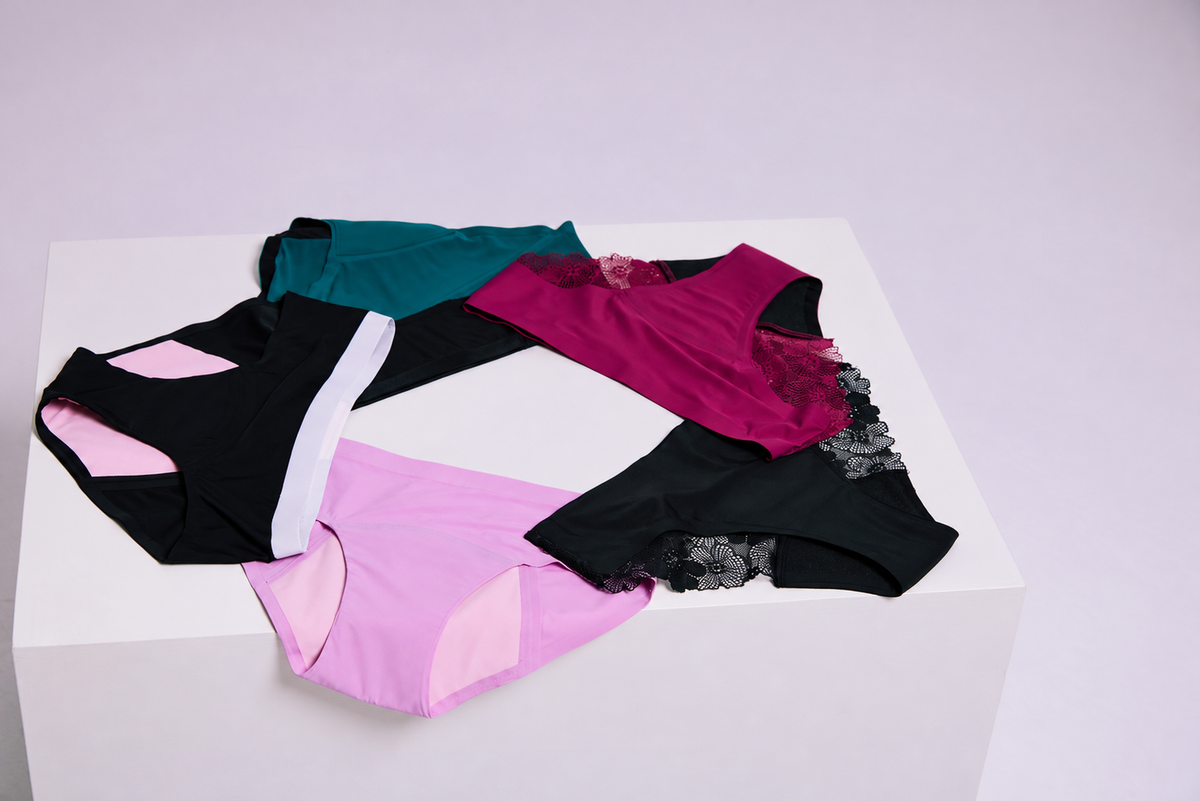
You want protection built into your underwear, either on its own or as backup. | Changing means changing the whole pair. Washing and drying take more planning than throwing away a pad. |
What did people prefer after trying them?
There’s a useful difference between liking the idea of a product and enjoying wearing it. In a South African trial published in 2015, participants tried a menstrual cup and their usual pads or tampons for three cycles each. Among the 105 who completed the study, cups received higher ratings for comfort and preference. Their ratings also improved with experience.
The Australian survey of 596 young people gives another perspective: about 88% of current reusable users agreed that reusables were comfortable, compared with 48% of those who had never used them.
What feels comfortable to you?
 What feels comfortable to you?
If you dislike the bulk or movement of a pad, period underwear may feel more natural. At first, I missed the feeling of a pad and kept checking for leaks. Once I learned how much my underwear could absorb, I relaxed—and came to prefer it.

If you prefer protection you can see and change easily, a pad or reusable pad might feel more reassuring. With reusable pads, check the fabric, thickness and how securely the pad sits in your underwear.
If you don’t like a pad between your legs, a tampon, cup or disc is worth considering—provided you’re comfortable with insertion and removal. If it hurts, take it out and check the fit and instructions.
If handling blood or washing feels daunting, disposable pads or tampons may feel easier for now.
And think about your clothes. Does the waistband dig in when you sit? Does the pad shift when you walk? Does the gusset stay comfortably against your body? Those small things can matter more over a whole day than a feature list.

If you don’t want to put anything inside your body
 If you don’t want to put anything inside your body
Start with pads, reusable pads or underwear. You don’t have to graduate to an internal product to have a good period routine.
A disposable pad is handy when you want to change and be done with it. A reusable pad gives you a similar way of changing, with washing afterwards. Underwear removes the separate pad altogether—but if it fills up while you’re out, you need to change the pair.
If you’re wearing trousers, tights and boots, changing a pad can be much easier than changing underwear.
If you want to swim or prefer internal protection for exercise
Tampons, cups and discs are the options I’d compare first. They sit inside your body, so you don’t have a pad between your legs.
A tampon may suit you if you want something disposable. A cup or reusable disc may suit you if you’d rather wash and reuse it. Ordinary pads and period underwear aren’t intended for swimming; period swimwear is a separate product.
For tampons, choose the lowest absorbency that handles your flow and change every four to eight hours, never leaving one in for more than eight. That’s the FDA’s guidance.
Cup or disc: how do you choose between them?
Both collect rather than absorb flow. A cup sits in the vaginal canal and forms a seal; a disc sits higher, around the cervix, with its front rim tucked behind the pubic bone. The main differences are capacity, emptying and sex:
Capacity. Discs often have a larger stated capacity than cups, which can be appealing on heavy days. Compare the actual models you’re considering: sizes vary, and a disc’s soft basin changes shape inside your body, so the advertised volume isn’t necessarily what it will hold while you’re wearing it.
Auto-dumping. For some people, a disc releases some blood into the toilet when they bear down. That can let you empty part of it without taking it out—handy on a heavy day. Afterwards, use a clean finger to tuck the front rim back into place. You still remove and clean a reusable disc at its scheduled change. A cup needs to be taken out to empty it.
Sex. A disc can stay in during vaginal penetrative sex because it sits higher and leaves the vaginal canal free. Emptying it beforehand can help reduce mess. A cup needs to come out first. A disc collects period blood; it doesn’t prevent pregnancy or sexually transmitted infections.
If your flow is heavy
For those extra-heavy days, a cup or disc with underwear works like magic for me: the internal product collects the flow, and the underwear catches leaks. If you prefer external products, a pad with period underwear is another combination to consider.
Keep changing or emptying the main product as needed, and check whether flow has reached the underwear too.

If you’re at work or school
 If you’re at work or school
Think about your bathroom. A pad or tampon is easy to replace and dispose of if there’s a bin. A reusable pad is easy to swap too, but you’ll carry the used one home in a bag.
Underwear alone can be great when its absorbency suits your flow and you’re comfortable changing the whole pair if needed. On a day when that sounds awkward, adding a reusable pad lets you change the pad without taking off your trousers.
A cup or disc can also fit into your routine once you know how often you need to empty it. If it’s new to you, practising at home first is a lot nicer than figuring out removal in a busy public bathroom.

If you’re home, winding down or going to bed

This is where underwear can feel especially simple. On lighter days, I love wearing it on its own. At bedtime, pay attention to coverage further up the back as well as absorbency.
If you prefer a pad, choose a shape and length that feel comfortable lying down. If you prefer a cup or disc, use its instructions to work out whether it suits your overnight routine. For a tampon, the eight-hour maximum still applies while you’re asleep.
If you’re travelling

Disposable pads and tampons mean you don’t need to find somewhere to wash and dry them, though you’ll need supplies and a bin. Reusable pads and underwear mean less to restock, but more to wash and get dry.
Cups and reusable discs don’t have a thick fabric panel to dry, but you still need a workable cleaning routine. Think about the bathrooms, water access and privacy you’ll have—not just what fits in your suitcase.
If you’re taking underwear, here are my tips for washing and drying it on a trip.

If you want to cut down on waste
 If you want to cut down on waste
A cup, reusable disc, reusable pad or period underwear can cut down on what you throw away each month. Check which kind of disc you’re buying: some are disposable.
A 2021 UNEP review of environmental studies found that cups had substantially lower environmental impacts than disposable pads and tampons. For reusable pads and period underwear, washing, drying and how long you keep using them all play a part.
My practical take: choose a reusable you’ll enjoy using enough to keep using. For fabric products, washing with a suitable laundry load and air-drying helps reduce the energy you use. Follow the care instructions so they last.
You can also mix things up. Underwear at home and a disposable pad on a trip still means fewer disposables than using them for every change.
If you’re watching your budget
A pack of pads or tampons costs less to buy today. Reusables can save repeated purchases over time, but the first purchase is bigger—and a rotation of underwear adds up. That upfront cost came up in the Australian survey too.
Try one before buying more. For underwear, budget for the pairs you’ll need between washes, rather than looking only at the price of one pair.
More help choosing
Trying period underwear for the first time · Washing reusable underwear
Background reading: FDA guide to menstrual products and NHS guide to choosing period products.
More from The Flow Files

Period underwear for beginners: how it works and how to use it
How period underwear works, how to wear it and how to choose your first pair.

How do you know when to change period underwear?
What to check so you can plan your next change with confidence.

How to wash period underwear: a simple routine
A straightforward routine for washing and drying period underwear.